DIY Drain Cleaning vs. Professional Service in Jacksonville, FL
Your kitchen sink is draining more slowly by the day. You’ve already tried the baking soda trick twice. The hardware store drain cleaner worked for about a week, and now the clog is back, worse than before.
Sound familiar? If you own a home in Jacksonville, FL, you’ve almost certainly been here. The question every homeowner faces at this point is the same: do I keep trying to fix this myself, or do I call a plumber?
This guide breaks down exactly when DIY Drain Cleaning makes sense, when it doesn’t, and what happens to your pipes when you pick the wrong option.
📞 Call now for same-day drain cleaning service in Jacksonville. Available 24/7 for emergencies, including nights and weekends.
→ Call Now for Fast Drain Cleaning Services in Jacksonville Phone: +1 (904) 750-0900
What Causes Most Drain Clogs in Jacksonville Homes
Before talking solutions, it helps to know what you’re actually dealing with. Not all clogs are created equal, and the cause determines whether a plunger will actually fix it or push the problem further down the line.
In bathroom drains, the usual suspects are hair and soap scum. They build up slowly, coat the inside of the pipe, and eventually choke the flow to a trickle. This is one of the most manageable types of clogs for a DIYer.
In kitchen drains, grease is the main offender. Grease goes down as a liquid and cools into a solid once it hits the pipe wall. Over months, it narrows the pipe like cholesterol in an artery. Coffee grounds, rice, and food scraps pile on top, and before long, no amount of hot water will clear them.
In older Jacksonville homes, there’s an additional factor most homeowners don’t think about: Jacksonville’s water supply draws from the Floridan Aquifer, which is naturally high in calcium and magnesium. That hard water leaves mineral deposits inside your pipes over time, especially in homes built before the 1990s in neighborhoods like Riverside, Arlington, and San Marco. That buildup narrows pipes and makes clogs happen faster and more often.
And then there are tree roots. Jacksonville’s humidity and subtropical climate create ideal growing conditions. Tree roots actively seek water, and older clay or cast-iron sewer lines develop small cracks that roots find quickly. A drain that keeps clogging for no obvious reason is a red flag that roots may have gotten into the line.
What DIY Drain Cleaning Can Actually Do
Let’s be honest: DIY works in certain situations. There’s no reason to call a plumber for every slow drain.
Here’s where DIY is reasonable:
Plunging is your first move for any toilet or slow sink drain. Use a cup plunger for sinks and a flange plunger for toilets. If the clog is close to the drain opening, a good plunge will often clear it in under a minute.
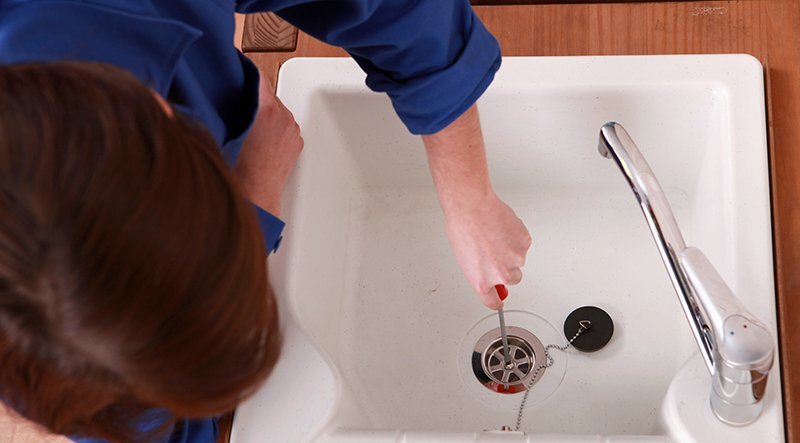
A hand-crank drain snake (auger) can reach blockages sitting 2–3 feet into the pipe. You can pick one up at Home Depot or Lowe’s for $25–$40. This works well for clogged bathroom drains caused by hair.
Baking soda and hot water work as a light maintenance flush on kitchen drains, not a clog remover, but a decent preventive habit if you do it monthly.
Enzymatic drain cleaners (not to be confused with chemical drain cleaners) use bacteria to break down organic matter. They’re safe for pipes and good for routine maintenance, though they work slowly and won’t clear a full blockage overnight.
The honest limit of DIY: These methods work on surface-level, organic clogs near the drain opening. They do nothing for grease buildup deep in the line, mineral scale, tree root intrusion, or any issue sitting in the main sewer line. And if you use them on a clog you can’t actually reach, you’re not fixing anything, you’re just delaying the call.
Why Chemical Drain Cleaners Are Worth Avoiding
Walk into any Jacksonville grocery store, and you’ll find shelves full of products that promise to dissolve clogs in minutes. Most of them contain sodium hydroxide (lye) or sulfuric acid.
Here’s the problem: those chemicals don’t distinguish between your clog and your pipes. They generate heat as they react, sometimes reaching temperatures over 200°F, which weakens PVC joints and accelerates corrosion in older metal pipes. Use them a few times a year, and you may end up with a leak where you once had a slow drain.
They’re also largely ineffective on grease, mineral scale, and anything sitting deeper than a few inches past the drain. What they do accomplish is a partial dissolution of organic matter, which means they may restore flow temporarily while leaving a sticky residue that makes the next clog form faster.
If you’ve already used a chemical cleaner, make sure to tell the plumber before they arrive. Running a snake through a drain that still contains caustic chemicals is a safety hazard.
What Professional Drain Cleaning Includes
When a licensed plumber comes out for a drain cleaning in Jacksonville, they’re not just running a snake down your pipe and calling it done. Here’s what professional service actually looks like:
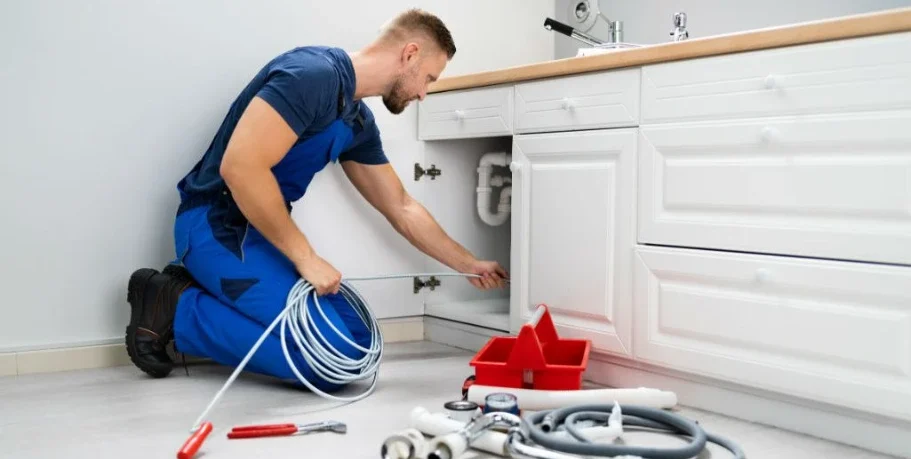
Drain snaking (electric auger): A motorized auger goes further and hits harder than anything you can do by hand. It can break apart or retrieve the blockage rather than just poking through it.
Hydro jetting: A high-pressure water stream (up to 4,000 PSI) blasts through grease, mineral scale, and organic buildup, then flushes everything downstream. This is the only method that actually cleans the inside wall of the pipe, not just pokes a hole through the clog. It’s particularly effective in Jacksonville homes with hard water scale buildup.
Camera inspection: A waterproof camera fed into the line lets the plumber see exactly what’s causing the problem, whether it’s a grease plug, a collapsed section of pipe, or tree root intrusion. This turns guesswork into a diagnosis.
Diagnosis of the root cause: A good plumber doesn’t just clear the clog; they tell you why it keeps coming back. That could mean identifying a slow-closing vent, a pipe with a negative slope, or roots in the sewer line that will require a different fix.
Real Cost Comparison: DIY vs. Professional in Jacksonville
Here’s what you’re actually comparing when you weigh DIY against a professional call in the Jacksonville area:
| Method | Upfront Cost | Fixes Root Cause? | Risk to Pipes |
|---|---|---|---|
| Plunger | $10–$20 | Sometimes | None |
| Hand drain snake | $25–$40 | Minor clogs only | Low |
| Chemical cleaner | $8–$15 | Rarely | High |
| Professional snaking | $110–$275 | Usually | None |
| Hydro jetting | $250–$600 | Yes | None |
| Camera inspection | $100–$300 | Diagnosis only | None |
The math changes fast when you factor in repeat service calls. A homeowner who buys $12 of drain cleaner every six weeks for two years has spent over $300 and still has a clog plus potential pipe damage. One professional cleaning that addresses the actual cause often ends that cycle.
Signs You Need to Call a Plumber in Jacksonville — Don’t Wait
Some situations aren’t judgment calls. If you’re seeing any of the following, stop the DIY attempts and call a licensed plumber:
- Multiple drains backing up at the same time: This points to a main sewer line blockage, not a single fixture clog. A plunger won’t touch it.
- Gurgling sounds from the toilet when you run the sink: Air is trapped somewhere in the system, which usually means a blockage deep in the line.
- Sewage smell from drains: A decomposing organic material or a venting problem. Either way, not a surface issue.
- Water backing up into the tub when you flush the toilet: A main line blockage is sending water back up through the path of least resistance.
- The same drain clogs every few weeks: The clog isn’t being cleared, just poked through. A camera inspection will show why.
- Slow drains throughout the house: Not just one fixture, but system-wide sluggishness suggests buildup or a partial blockage in the main line.
Any of these signs in a Jacksonville home with older cast iron or clay pipes, common in established neighborhoods across Duval County, warrants a professional call, not another trip to the hardware store.
The Risks of Ignoring a Drain Problem
A slow drain feels like a minor nuisance. Left alone, it can become a significant repair.
Partial blockages put backpressure on pipe joints and seals. In Jacksonville’s older housing stock, those joints are already aged. A clog that sits long enough can cause a slow leak inside a wall or under a slab, and by the time water shows up at the surface, the damage is already done.
Sewer line issues carry additional risk. A backed-up main line can push sewage into the lowest fixture in your home, a floor drain, bathtub, or toilet. That’s not just a plumbing problem; it’s a health hazard that requires professional cleanup on top of the repair.
Ignoring root intrusion is particularly costly. Tree roots in a sewer line will keep growing. A small root that could have been cleared with hydro jetting in 2024 may require a partial sewer line replacement by 2026.
When DIY Makes Sense vs. When to Call a Pro
Use DIY when:
- It’s a single fixture with a slow drain
- The clog is recent (not a recurring problem)
- You can see or feel the blockage near the drain opening
- You’re doing routine maintenance on a drain that’s working fine
Call a plumber when:
- Multiple fixtures are affected
- The clog keeps coming back
- You’ve already tried DIY, and it hasn’t worked
- There’s a sewage smell, gurgling, or backflow
- Your home is older, with original cast iron or clay pipes
- You suspect tree root intrusion
Get Jacksonville’s Drains Flowing Again — Today
If your drain keeps clogging, runs slowly, or you’re hearing gurgling sounds from other fixtures, the problem is usually deeper than any store-bought solution can reach.
We connect Jacksonville homeowners with licensed, local plumbers who can diagnose the real issue and fix it right — the first time.
Serving Jacksonville, FL, and surrounding areas including Orange Park, Atlantic Beach, Fleming Island, and Mandarin.
📞 We are Available 24/7 for emergencies, including nights and weekends.
No guesswork. No repeat calls. Just clear drains and honest answers from a licensed Jacksonville plumber.
Frequently Asked Questions
Q: Is it worth calling a plumber for a clogged drain, or should I try to fix it myself?
Try a plunger or hand snake first. If the drain doesn’t clear within 15–20 minutes, or it’s a recurring problem, call a plumber. DIY attempts on a persistent clog usually push the blockage deeper.
Q: How much does professional drain cleaning cost in Jacksonville, FL?
Single fixture cleaning runs $110–$275. Main sewer line clearing costs $180–$400. Hydro jetting ranges from $250 to $600. Camera inspection is typically a $100–$300 add-on.
Q: Why does my drain keep clogging even after I clean it?
Because the root cause hasn’t been fixed. In Jacksonville homes, the usual culprits are deep grease buildup, hard water mineral scale, or tree root intrusion in the sewer line. A camera inspection will pinpoint it fast.
Q: Are chemical drain cleaners safe to use on Jacksonville pipes?
No. They generate heat that weakens PVC joints and corrodes older metal pipes. They may restore flow temporarily, but leave residue that speeds up the next clog. Stick to manual methods or call a pro.
Q: How often should drains be professionally cleaned in a Jacksonville home?
Every 1–2 years for most homes. If you have older pipes, large trees in the yard, or hard water, go annually. Seasonal flushing with hot water won’t damage pipes; chemical cleaners will.