Water Heater Not Producing Hot Water? Jacksonville Guide
Hot water is one of those things Jacksonville homeowners rarely think about until it suddenly disappears. Whether you’re stepping into a cold shower on a humid Florida morning or filling up the sink to tackle a pile of dishes, a water heater that stops working is more than an inconvenience. It disrupts your entire daily routine.
If your water heater is not producing hot water in your Jacksonville home, you’re not alone. This is one of the most common plumbing service calls we receive across Jacksonville, Fleming Island, Orange Park, Ponte Vedra Beach, and the Beaches communities. The good news: most water heater problems have a clear cause, and many can be diagnosed quickly.
In this guide, we’ll walk you through every likely reason your water heater has stopped producing hot water, how to identify which issue you’re dealing with, what you can safely do yourself, and when it’s time to call a licensed Jacksonville plumber.
Need help right now? Our Jacksonville plumbing experts are available 24/7 for water heater repairs and emergency service.
Quick Diagnosis: What Type of Water Heater Do You Have?
Before troubleshooting, it’s important to know what type of water heater is installed in your home. The cause of your no-hot-water problem will depend heavily on whether you have:
Gas water heater: heated by a gas burner with a pilot light or electronic ignition.
Electric water heater: uses one or two electric heating elements inside the tank.
Tankless (on-demand) water heater: heats water instantly without a storage tank; available in gas and electric models.
Jacksonville homes built before 2000 often have older tank-style water heaters in garage utility areas or interior closets. Newer construction and recent renovations increasingly feature tankless systems. Knowing your system type will help you follow the right troubleshooting steps below.
7 Most Common Reasons Your Water Heater Isn’t Producing Hot Water
1. Faulty or Incorrectly Set Thermostat
One of the most frequent and most overlooked causes of a water heater not producing hot water is a thermostat problem. The thermostat controls when your heating element or gas burner activates and at what temperature it heats the water in your tank.
Jacksonville’s climate means most households set water heaters between 120°F and 140°F. If the thermostat drifts, gets bumped, or simply fails, the water in your tank may never reach a usable temperature.
Warning signs of a thermostat problem: Water coming out of the tap is lukewarm but never fully hot – Water temperature is inconsistent throughout the day – Hot water runs out faster than usual – No hot water at all despite the unit appearing to run.
What you can do: Locate the thermostat access panel on your water heater (electric models typically have upper and lower thermostats behind insulated panels). Check the set temperature it should be no lower than 120°F per EPA recommendations. If adjusting the thermostat doesn’t restore hot water within an hour, the thermostat itself may be defective and will need to be tested and replaced by a licensed plumber.
2. Sediment Buildup Inside the Tank
Jacksonville’s water supply, like much of Northeast Florida, contains naturally occurring minerals primarily calcium and magnesium. Over time, these minerals settle and accumulate as sediment at the bottom of your water heater tank, forming a thick, insulating layer between the water and the heating source.
This is one of the most common water heater problems we diagnose throughout the Jacksonville area, particularly in older homes and in neighborhoods with higher mineral content in the water supply.
Warning signs of sediment buildup: A rumbling, popping, or banging sound coming from the tank (this is steam bubbles escaping through hardened sediment) – Water is taking significantly longer to heat up than it used to – Your hot water supply is noticeably reduced – Higher energy bills without a clear explanation – Discolored or rust-tinged hot water
What you can do: Flushing the tank once a year can remove loose sediment and restore efficiency. Attach a garden hose to the drain valve at the base of the tank, turn off the cold water supply, and let the tank drain completely. If you’ve never flushed your tank or the unit is more than 5 years old, have a professional plumber perform this service severely compacted sediment sometimes signals the tank is near the end of its useful life.
3. Failed Heating Element (Electric Water Heaters)
If your home has an electric water heater, the actual work of heating water is done by one or two resistive heating elements submerged inside the tank an upper element and a lower element. When either of these fails, your water heater’s output is severely compromised.
A failed upper element means you’ll get little to no hot water at all. A failed lower element typically results in a smaller-than-normal supply of hot water before it runs cold.
Warning signs of a failed heating element: Water stays cold no matter how long you run the tap – Only a small amount of lukewarm water before it turns cold – Hot water runs out unusually fast – The water heater is running (circuit breaker is on) but producing no heat
What you can do: A professional plumber can test heating elements using a multimeter for electrical continuity. A failed element reads zero ohms. Replacing a heating element is a straightforward repair that typically costs far less than replacing the entire unit but it does require draining the tank and working with electrical components. This is not a DIY repair for most homeowners; contact a licensed Jacksonville plumber.
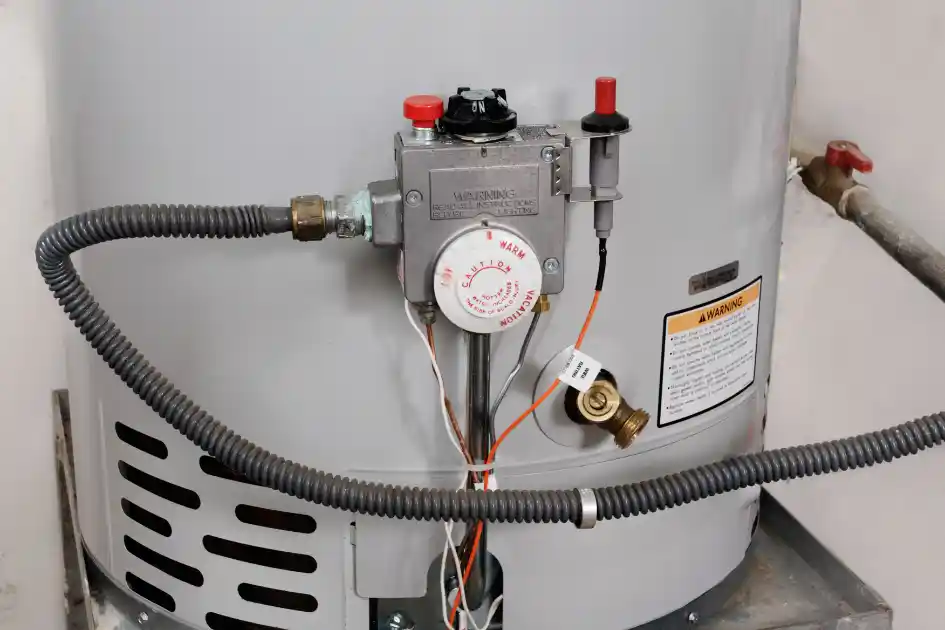
4. Gas Supply or Pilot Light Problems (Gas Water Heaters)
Gas water heaters are popular in Jacksonville homes and offer efficient, cost-effective hot water heating. However, they depend on a consistent gas supply and a functioning ignition system. Any disruption from a simple pilot light outage to a gas valve failure will leave you without hot water.
Common gas-related issues: Pilot light is out this is the most common gas water heater problem. The pilot light is a small, continuously burning flame that ignites the main burner. A draft, a brief gas interruption, or a dirty pilot orifice can extinguish it.
Faulty thermocouple or thermopile this safety device shuts off the gas if the pilot light goes out. A worn thermocouple may shut off the gas even when the pilot is lit, preventing the main burner from firing. – Gas valve malfunction the gas control valve regulates gas flow to both the pilot and the main burner.
A failed valve means no gas reaches the burner. – Gas supply interruption check whether other gas appliances (stove, furnace) are working. If they’re all out, there may be an issue with your gas supply line or meter.
What you can do: If the pilot light is out, you can safely relight it following the instructions printed on your water heater’s label. If the pilot won’t stay lit after relighting, or if it goes out repeatedly within a day or two, the thermocouple is likely failing and needs replacement. Any suspected gas valve issues or gas supply problems should be handled immediately by a licensed plumber do not attempt to repair gas components yourself.
Safety Note: If you smell gas near your water heater, leave the home immediately, avoid using light switches or open flames, and call your gas utility company and a licensed plumber from outside the building.
5. Tripped Circuit Breaker (Electric Water Heaters)
Electric water heaters are typically on a dedicated 240-volt circuit in your home’s electrical panel. If the circuit breaker trips due to a power surge, a momentary overload, or an electrical fault within the heater the heating elements lose power completely and your water will go cold.
This is one of the easiest no-hot-water causes to check yourself before calling a plumber.
What you can do: 1. Locate your home’s electrical panel (typically in a garage, utility room, or hallway) 2. Find the breaker labeled for your water heater it will be a double-pole breaker (takes up two slots) 3. If it’s in the middle or “off” position, switch it fully to “off” first, then firmly back to “on” 4. Wait 30–60 minutes and check your hot water.
Important: If the breaker trips again within a day, do not keep resetting it. A repeatedly tripping breaker signals an underlying electrical fault either in the water heater itself (a shorted heating element is a common cause) or in the wiring. This requires professional diagnosis before it becomes a fire hazard.
6. Leaking Water Heater Tank
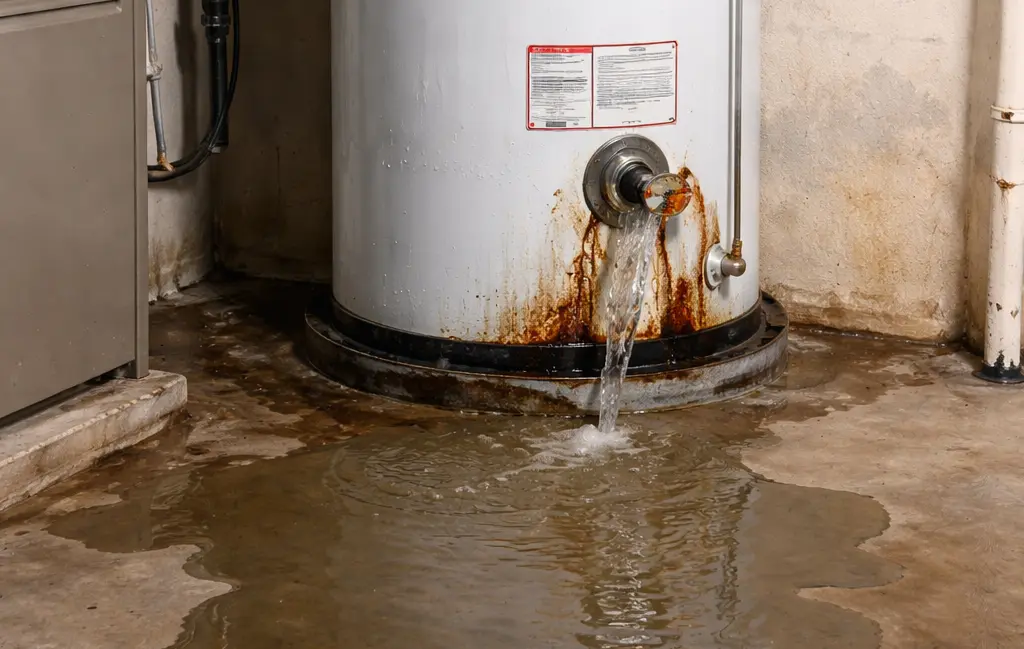
A leaking tank does more than waste water it can prevent your water heater from maintaining adequate pressure and volume to produce consistently hot water. In some cases, a slow internal leak goes unnoticed for weeks while the unit’s performance quietly degrades.
Jacksonville homeowners should be particularly attentive to this issue. The combination of humidity, hard water mineral buildup, and the heat cycling stress of Florida summers can accelerate corrosion and tank failure, particularly in units over 8 years old.
Warning signs of a leaking tank: – Water pooling on the floor around the base of the heater – Moisture, rust stains, or mineral deposits on the tank’s exterior – Damp or water-stained drywall near the unit – A noticeable reduction in hot water output – Your water heater runs constantly but water never gets fully hot.
What you can do: If you find water around your water heater, first check the pressure relief valve (T&P valve) this safety device occasionally discharges a small amount of water as a normal function. If the leak is coming from the tank itself (bottom seam, weld points, or rust-through), the unit almost certainly needs to be replaced. A leaking tank cannot be repaired. Call a plumber to assess whether you’re dealing with a valve issue (repairable) or a tank failure (replacement required).
7. Aging Water Heater Past Its Service Life
Traditional tank water heaters are designed to last 8 to 12 years. Tankless water heaters can last 15 to 20 years with proper maintenance. If your Jacksonville home’s water heater is approaching or has exceeded this range, declining hot water production is often the first sign that the unit is nearing the end of its life.
The hard water common throughout the Jacksonville area can shorten a tank water heater’s lifespan by 1 to 3 years compared to national averages if annual maintenance is neglected.
Signs your water heater may need replacement rather than repair: The unit is more than 10 years old (check the serial number on the label the first two digits often indicate the manufacture year) – You’re experiencing frequent breakdowns requiring repeated repairs – Energy bills have increased noticeably without other explanation – Hot water output has gradually decreased over months – The tank has rust-colored water or visible exterior corrosion – You’ve already repaired major components (heating elements, thermostat) within the past two years.
What you can do: Have a licensed plumber assess whether repair or replacement is the more cost-effective option. In many cases, investing in a new energy-efficient water heater or upgrading to a tankless system saves Jacksonville homeowners significantly on utility bills over the next decade.
Read More: Professional drain cleaning services in Jacksonville
What About Tankless Water Heaters Not Producing Hot Water?
Tankless water heaters are increasingly common in Jacksonville homes and have their own set of specific failure points:
- Flow rate too low: most tankless heaters require a minimum water flow to activate. A partially closed valve or low water pressure can prevent the unit from turning on.
- Mineral scale buildup on the heat exchanger: Jacksonville’s hard water can coat internal components, reducing efficiency and eventually causing shutdowns.
- Error codes on the display: most modern tankless heaters display diagnostic codes when something goes wrong. Note the code and share it with your plumber for faster diagnosis.
- Venting issues (gas tankless): blocked or incorrectly installed exhaust venting can trigger safety shutoffs.
- Overloaded capacity: running multiple hot water fixtures simultaneously can exceed the unit’s capacity, resulting in temperature drops.
Annual descaling and flushing is especially important for tankless water heaters in Northeast Florida due to local water hardness levels.
How Long Does It Take to Get Hot Water Back?
One of the most common questions Jacksonville homeowners ask after diagnosing or fixing a water heater problem:
| Situation | Time to Restore Hot Water |
| Thermostat adjusted | 1–2 hours for full tank to reheat |
| Circuit breaker reset | 30–60 minutes |
| Pilot light relit | 20–40 minutes |
| After tank flush (sediment removal) | 1–2 hours |
| After heating element replacement | 1–2 hours |
| New water heater installation | Same day, typically 2–4 hours |
When to Call a Jacksonville Plumber And When You Can Wait
Call now, a professional for water heater repair services in Jacksonville, we help resolve all issues immediately.
Call a plumber immediately if: You smell gas near your water heater – There is water actively leaking from the tank or pooling on the floor – The circuit breaker trips repeatedly after resetting – You have no hot water and cannot identify the cause – The water heater is making loud banging, hissing, or rumbling sounds – Your hot water has a rotten egg smell (can indicate bacterial growth or anode rod failure).
You can troubleshoot yourself first if: You simply need to check and reset the circuit breaker – The pilot light went out and your heater’s label has relighting instructions – You want to check the thermostat setting – You’re experiencing a gradual decline in performance and want to schedule a non-urgent service call
Our Jacksonville water heater repair team offers same-day service for most water heater emergencies throughout Jacksonville, including Arlington, Southside, Mandarin, San Marco, Orange Park, Jacksonville Beach, and all surrounding communities.
Water Heater Repair vs. Replacement: How to Decide
This is the question most Jacksonville homeowners face when their water heater fails. Here’s a practical framework:
Lean toward repair if: The unit is under 8 years old – Only a single component has failed (thermostat, heating element, thermocouple) – The tank itself shows no signs of corrosion or leaking – The repair cost is less than 50% of the cost of a new unit.
Lean toward replacement if: The unit is 10+ years old – The tank is leaking – You’ve repaired it twice in the past three years – Energy bills have been rising steadily – You want to upgrade to a more efficient tankless system.
Jacksonville homeowners considering replacement should also know that modern heat pump water heaters and tankless units can qualify for federal energy efficiency tax credits your plumber can advise you on current rebate and incentive programs available in Florida.
Preventive Maintenance Tips to Avoid Water Heater Problems
Regular maintenance is the single most effective way to extend the life of your water heater and prevent unexpected cold-water surprises. Jacksonville plumbers recommend the following annual maintenance checklist:
Every 12 months: Flush the tank to remove sediment (especially important in Northeast Florida due to water hardness) – Test the pressure relief (T&P) valve lift the lever briefly to ensure it opens and releases water, then closes fully – Inspect the anode rod a sacrificial magnesium or aluminum rod that protects the tank from corrosion; replace when it’s less than ½ inch thick or heavily corroded – Check all connections and fittings for moisture or corrosion signs – Inspect the flue and venting on gas water heaters for blockages or damage.
Every 2–3 years: – Have a licensed plumber perform a full system inspection – Consider descaling for tankless units.
Ongoing: Monitor your energy bills an unexplained increase can be an early sign of declining efficiency – Listen for unusual sounds (rumbling, popping, hissing) – Keep the area around your water heater clear for ventilation and access.
Frequently Asked Questions: Water Heater Problems in Jacksonville
Q: How much does water heater repair cost in Jacksonville, FL?
A: Most water heater repairs in Jacksonville range from $150 to $600 depending on the component that needs replacement. Common repairs include thermostat replacement ($150–$250), heating element replacement ($200–$350), and thermocouple replacement ($100–$200). Full replacement costs vary based on unit type and size.
Q: How long should a water heater last in Jacksonville?
A: Traditional tank water heaters typically last 8–12 years. However, Jacksonville’s hard water and the heat stress from Florida’s climate can shorten this to 7–10 years without proper annual maintenance. Tankless water heaters last 15–20 years.
Q: Why is my water heater making noise?
A: Rumbling or popping sounds usually indicate sediment buildup at the bottom of the tank a common issue in Jacksonville. Hissing may indicate a small water leak. A high-pitched whining could indicate a failing heating element. Any unusual sound warrants a professional inspection.
Q: Can I install a tankless water heater myself in Jacksonville?
A: No. Tankless water heater installation requires licensed plumbing permits in Jacksonville (Duval County) and must comply with Florida Building Code requirements. Improper installation voids manufacturer warranties and can create safety hazards. Always use a licensed Jacksonville plumber for installation.
Q: My water heater is only 3 years old why is it already having problems?
A: Early failures can result from improper installation, a manufacturing defect (check if the unit is still under warranty most carry 6–12 year warranties), unusually hard water with no treatment, or running the unit at excessively high temperatures. Contact your installer and manufacturer before paying for repairs warranty coverage may apply.
Why Jacksonville Homeowners Choose Professional Water Heater Service
A water heater isn’t just a convenience in Florida’s climate, hot water plays an important role in sanitation, laundry, and daily hygiene. Attempting complex repairs without the right tools, parts, or licensing can void your warranty, create safety risks, or result in more expensive damage.
Our licensed Jacksonville plumbers bring the right diagnostic equipment to every call including electrical testing tools, thermal cameras, and water quality assessment to diagnose your water heater problem accurately the first time.
We serve homeowners throughout Duval County and surrounding areas, including:
- Jacksonville Beach, Neptune Beach, Atlantic Beach
- Ponte Vedra Beach and Nocatee
- Fleming Island and Orange Park (Clay County)
- Mandarin, Julington Creek, and Fruit Cove
- Arlington, Regency, and Southside Jacksonville
- Murray Hill, Avondale, and Riverside
- San Marco, San Jose, and Baymeadows
- Westside Jacksonville and Lake City Road corridor
- Fernandina Beach and Nassau County
Schedule Water Heater Service in Jacksonville Today
Whether you’re dealing with no hot water, lukewarm water, strange noises, or a visibly leaking tank don’t wait for a small problem to become a major plumbing emergency.
Our Jacksonville water heater repair specialists are available 7 days a week for diagnostics, repairs, and full system replacements. We work on all major brands and both tank and tankless systems.
Final Thoughts
A water heater that stops producing hot water can disrupt daily routines and create unnecessary stress. Fortunately, most water heater problems are caused by common issues such as thermostat failures, sediment buildup, heating element damage, or gas supply interruptions.
Identifying these problems early can help prevent larger plumbing issues and costly repairs. Regular maintenance and timely professional inspections can keep your water heater operating efficiently for years to come.
If your system continues to struggle with hot water production, contacting an experienced plumbing professional can help restore reliable hot water to your home.